Recycling and Sustainability — Garden Clearance Millbank
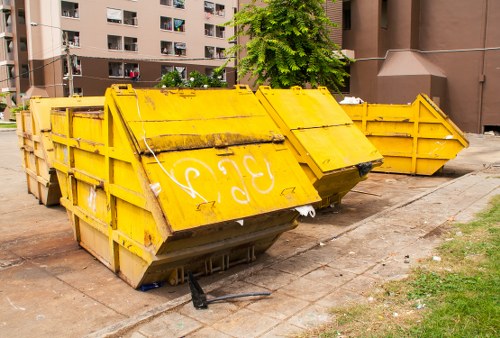
Our Millbank team specialises in responsible garden clearance Millbank services with a clear focus on an eco-friendly waste disposal area and a practical, sustainable rubbish area approach. We run each clearance with careful separation on-site so that soil, green waste, timber, metals and inert materials are sorted before transport. This ensures less landfill and more value recovered for reuse, recycling and composting, reflecting our commitment to a circular approach across the boroughs we serve.Our sustainability commitment
We set measurable targets to drive continuous improvement in our garden rubbish disposal Millbank operations. Our current recycling percentage target is an ambitious 70% diversion from landfill by 2028, achieved through segregation, reuse partnerships and efficient logistics. The target is reviewed annually and aligned with local borough strategies, so our Millbank garden clearance activities complement council-led waste separation policies.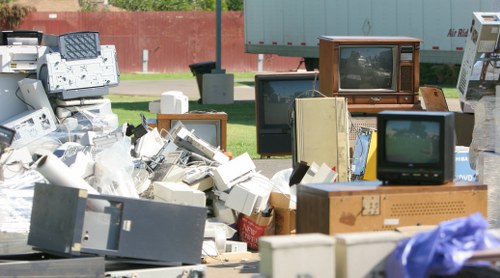 To reach that goal we operate a clear, repeatable process: collect and sort on-site, transport separated loads to appropriate facilities and partner with charities and social enterprises for items suitable for reuse. Key performance indicators include tonnage recycled, tonnage reused through charity partnerships, and carbon emissions per job. We also track the percentage of green waste composted and the proportion of construction-type materials diverted to recovery networks.
Local transfer stations and resource hubs
Our garden clearance in Millbank uses nearby transfer stations to minimise travel distances and time on the road. Where possible we deliver separated loads to the Westminster transfer station and neighbouring borough transfer depots, and we make use of civic amenity sites that accept green waste, timber and mixed recyclables. These logistics choices reduce mileage and support an eco-friendly waste disposal area model for local neighbourhoods.We also coordinate with borough-level waste initiatives. Many London boroughs operate distinct waste streams: separate collections for food waste, a brown or green bin for garden waste, and segregated dry recycling for paper, glass, cans and plastics. Our Millbank garden clearance teams adapt to these systems—sorting to match the expected end-processing at the transfer stations so that the local waste separation approach is respected and enhanced.
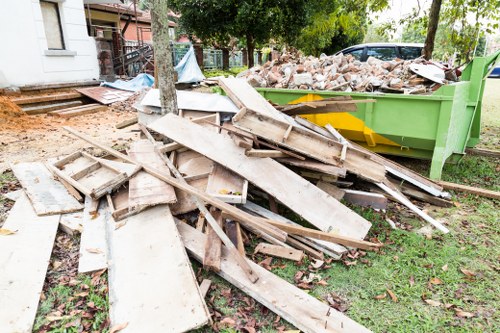 Partnerships are central to our sustainable rubbish area outcomes. We work with local charities and reuse networks to keep usable items in circulation: small furniture, planters, terracotta pots, and hand tools are diverted to community groups and charity shops. Strong partnerships with charities reduce waste, help fund local causes and provide affordable goods to residents. We prioritise redistribution when items remain in good condition.
Within the clearance process we operate simple but effective separation categories: green waste for composting, clean timber for chipping and reuse, metals for scrap recycling and mixed inert materials for appropriate recovery. Organic garden waste is preferentially processed through composting or anaerobic digestion facilities, improving soil health and cutting methane compared to landfill. Our aim is to ensure that each load is directed to the best possible processing stream.
To make this practical on every job we apply clear labelling, secure bags for hazardous small items and on-site sorting stations. These measures help create an organised, sustainable rubbish area at each property and reduce cross-contamination of materials—one of the most common barriers to achieving high recycling percentages in urban garden clearances.
We also invest in local recycling activity like chipping bulky green material into mulch, separating wood for biomass or reuse, and collecting metals for certified scrap processors. These activities mirror borough-level ambitions for higher recycling rates and a circular approach to resource management, contributing to the wider environmental targets set by local authorities.
Community engagement is part of our DNA. We support community reuse hubs, donate viable items to charity shops and run small-scale projects that turn green waste into community compost for allotments. Our charity partnerships not only keep usable goods out of landfill but also foster social value: charity partners receive materials, residents access low-cost items, and local circular economy initiatives gain reliable feedstock.
 Fleet and carbon management are crucial to a sustainable rubbish area. Our low-carbon vans include electric and hybrid vehicles used for short urban hops, and Euro 6 diesel alternatives for heavier loads where EV charging or payloads make electric use impractical. We implement route optimisation software to reduce mileage, minimise idle times and schedule transfers to local depots during off-peak hours to cut emissions.
 In summary, our approach to Millbank garden clearance blends best practice waste separation, active charity partnerships, efficient use of local transfer stations and continual investment in low-carbon vans to deliver a genuinely sustainable rubbish area. By meeting our 70% recycling percentage target, prioritising reuse and leveraging borough waste separation systems, we aim to offer a garden clearance service that is responsible, transparent and designed to keep resources in use for as long as possible.